
The Moral Ambiguity of Creation
The Dark HalfThad’s responsibility for Stark is neither simple guilt nor innocence; the novel traces how creative desire, denial, and choice shape a monster.
increasing Bearing strength in each event
 decreasing
Bearing strength in each eventdecreasingAn Escape Hatch
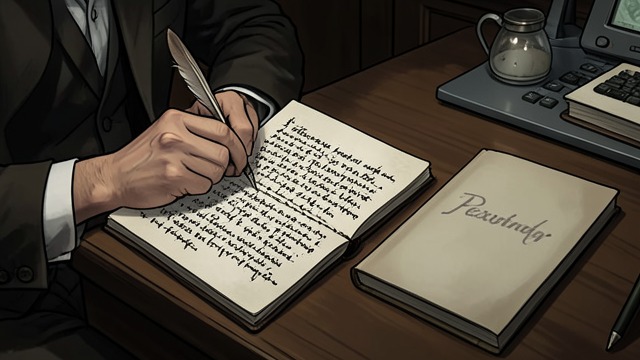
An Escape Hatch
Freedom from judgment
Thad adopts Stark to write without the scrutiny attached to his own name. The pseudonym gives him permission to pursue a more violent genre.
Desire beneath the method
The freedom is emotionally attractive because Stark embodies qualities Thad lacks. The novel suggests that the dark double answers a real longing, even if its later violence exceeds that wish.
A Public Killing
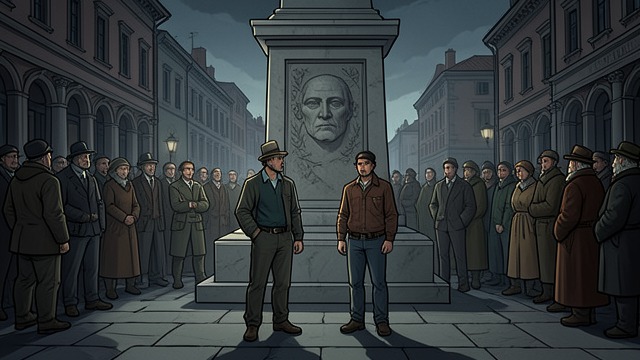
A Public Killing
Ending by announcement
Thad and Liz treat disclosure as a way to kill the pseudonym. Their public account presents Stark’s death as a decision they control.
Responsibility displaced
The language of burial hides uncertainty about what Stark meant to Thad. The public story makes the ending sound cleaner than the private history allows.
Denial Under Pressure
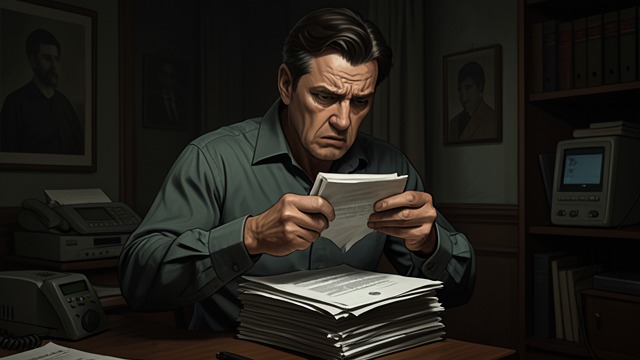
Denial Under Pressure
A plausible dismissal
Thad initially suspects stress, memory, or the return of a tumor. He destroys automatic writing rather than face what it might mean.
Avoidance becomes dangerous
His uncertainty is understandable, but each delay leaves Stark free to act. The novel connects denial to responsibility without treating them as identical.
A Choice to Collaborate
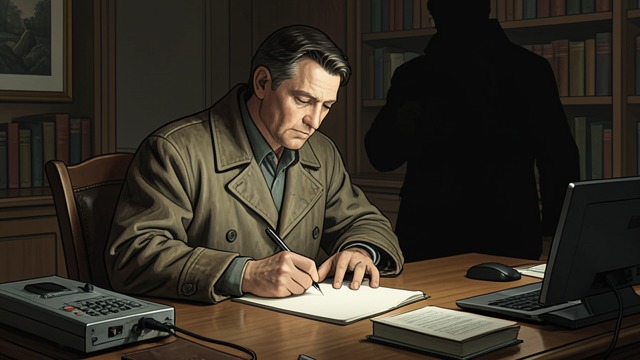
A Choice to Collaborate
Submission as strategy
Thad agrees to write Steel Machine because Stark has threatened his family. At the same time, part of him genuinely wants the story.
Desire and duty collide
The collaboration exposes how difficult it is for Thad to separate survival from creative attraction. He must confront the part of himself that welcomes Stark’s force.
A Debt Beyond Victory
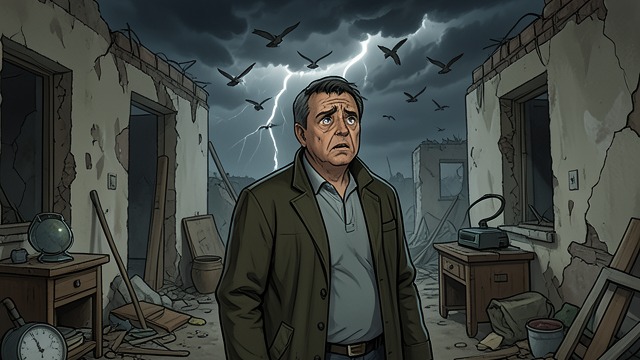
A Debt Beyond Victory
Survival without absolution
Stark is gone, but the wreckage remains and Alan cannot treat Thad as untouched by the events. Thad’s own sense of responsibility persists.
The bill remains uncertain
The story ends with questions about what the birds will demand and whether the price has been paid. Victory offers no final moral accounting.
1975, when Thad chooses a pseudonym
Spring 1988, when Thad reveals Stark
Early June 1988, during the first investigation
The final night at the lake house
After the sparrows withdraw
